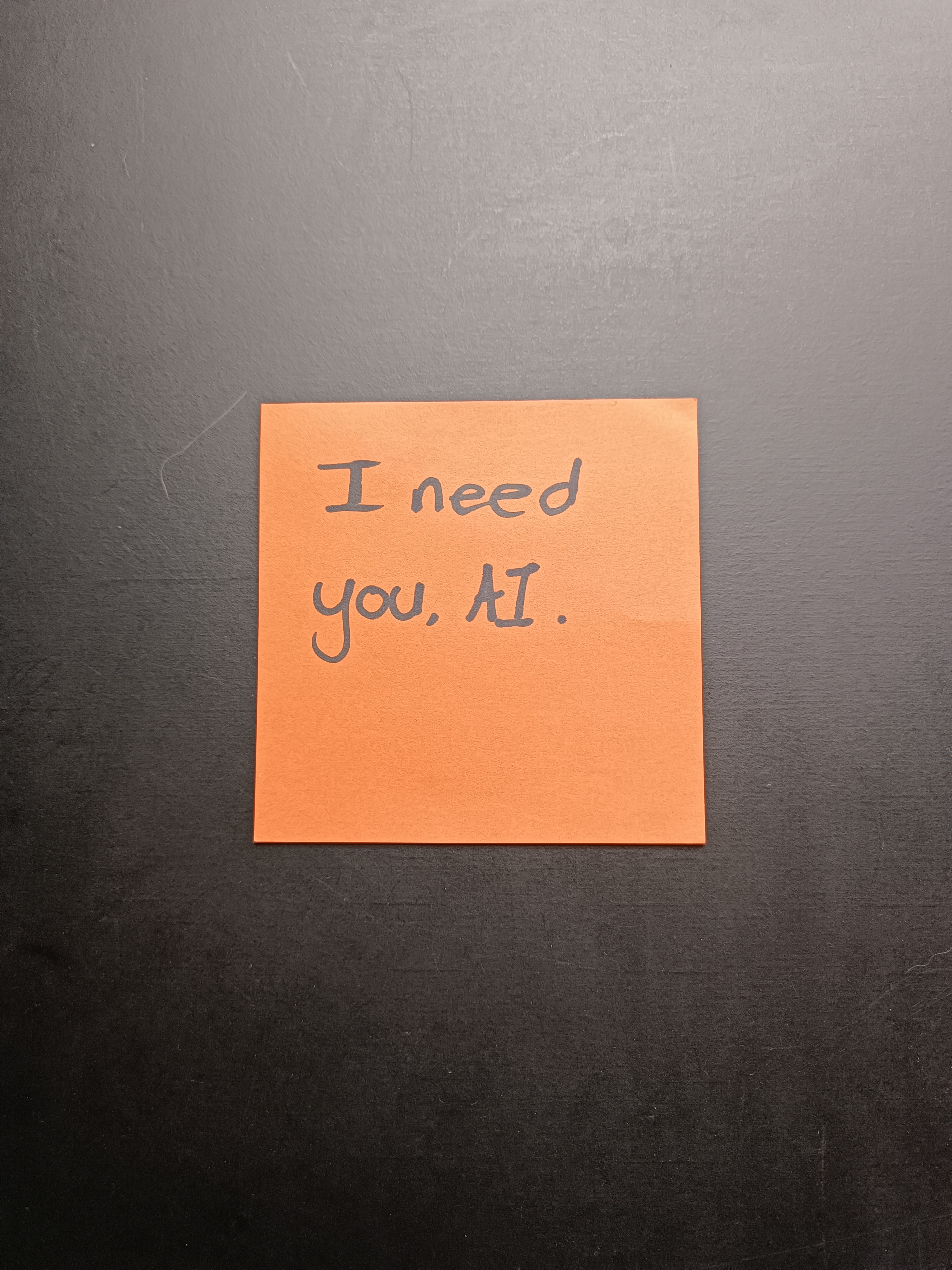

Are you giving away your power?
You probably do it everyday... you depend on somebody or something. To be fair, you probably don’t think of many things as a dependency. When it comes to reliance, an easy one to consider is with regards to convenience. We are surrounded by conveniences that make our lives better, we rely on running water in our taps, food in the fridge or the shop, a stable electricity supply, and fast internet access. We barely think about them, but those conveniences make our lives more comfortable and as a result we have more time for other activities. Sometimes reliance is more about trust, such as being able to trust that the chronic medication will manage the symptoms of an illness reliably, or our trust that the financial investment we have is earning a positive interest.
So, what if you depended on that convenience? You might think that you don’t depend on anything, but is that really true. Unless you are a subsistence farmer, you probably depend on the convenience of the grocery store, the butcher, the baker, and also the internet service provider. For those things you must depend on somebody or an institution.
Power and dependence form a relationship. When we depend on something, we give it value, and when we give it value, we give it power (DuBrin, A.J., 2018). That can be true between people, but also between people and conveniences, and between us and our use of Artificial Intelligence.
Now what if depending on something becomes a dependence? This is when we start to give a value to the people or systems that we depend on. This is more than just saying, “I’ll pay for the convenience”, this is instead saying, “I don’t know what I would do without it.”
Obviously in this day and age we all depend on something. Some people depend on life-saving medical care, and we rely on access to that medical care being available. We depend on the sunlight and rain to be in the right proportions, because that is how farmers grow crops – that eventually becomes our food. We rely on the internet service provider for a fast and stable connection. Our level of dependence is often exposed when access to those conveniences or the lack of those conveniences impacts our lives because of a disruption or challenge.
For instance, if there is a drought, farmers suffer losses with their crops – and less of that food is available, and as a result that food costs more. We place a lot of value on food being available. What if the under-sea internet cable is damaged, our fast and stable internet connection is either slow or non-existent. We know that those who enable us to be connected in this digital age are the ones who have power.
Now, what happens when we put our dependence and reliance on something like AI? Artificial Intelligence can be very convenient to use. We can use AI very positively. For convenience, we can use AI positively for things like providing template documents, summaries of information, fast processing of repetitive information, and so forth.
Unfortunately, AI can also be used in very damaging ways, such as when we struggle to discern if the voice we hear on the phone call or the person we see in the video is real or generated artificially. Worse when that AI voice on the phone call or that AI person in the video can be used to trick us into giving away our personal information or our finances.
Should we stay away from conveniences in the process? No, well, not unless you are prepared to ‘live off the land’ and only eat the food you produce, and only wear clothes that you made yourself, and never used the internet or any electrical devices, and never travelled in a vehicle that was not drawn by animals. Personally, I do rely on the grocery store to buy my food, and I rely on having a working vehicle. I can probably put up with a few inconveniences to these items in the short-term, but in the long-term, I definitely depend on some of these things.
What about Artificial Intelligence, should I use it or stay away from it? AI is finding its way into almost everything. Some of it is subtle like predictive text that can either be helpful or frustrating. AI can be used very deliberately to analyse huge amounts of data and those results can then provide us with new learning. Like most things though, how you use AI and what you use it for, do matter.
If you choose to read the AI summary provided for your internet search results, it could save you some time, and even save you from opening questionable websites in the search for some quick answer. Here’s the caveat though, just because the AI summarized your search results, you should probably check at least one or two reliable sources without the help of AI - just to be sure that AI didn’t get it wrong. If you aren’t prepared to do that extra step and check it for yourself, that is when you could be in trouble. You rely on AI to be quick and save you time, but if you depend on AI so much that you won’t even consider checking some sources for yourself, then you are giving AI more value. When you give AI more value, that is when you start to give it more power over various aspects of your life.
According to the Dependence Theory of Power, power can be accrued when people or systems depend on them for something of value (Richard M. Emerson, 1964).
Do the test, even if just as a thought exercise, and ask the question ‘What would I do if <insert convenience> was not available?’ Can you make it, at least for the short-term, with out that convenience? If that convenience was no longer available, what would be my alternative?
What would I do if there was no auto-correct on my phone? I could open a dictionary and check the correct spellings of words, and then fix the text on my phone by typing the word correctly.
What if there was no predictive text? I would be able to complete my own sentences without any external influence.
What would happen if there was no AI internet search summary? I could exercise my own research abilities to open websites for myself, and even consider using information that is in printed paper format to find the information I’m looking for.
What if there were no fake (or AI generated) videos or phone calls? I would be relieved.
The value that you assign to something determines the power it has in your life. I enjoy convenience, but I don't need every convenience ever invented. I rely on running water in my taps, but I could endure the inconvenience of a short-term water disruption (especially if I was given advance notice). I know that even though I've never intentionally signed up for any AI software it has still impacted my life, but I don't depend on AI. I appreciate the effort that I would have to make to do some research for myself, because that is when I learn the most. I have not given up my power, or become dependent on convenience to the point where I am unable to do things for myself. I appreciate the value, but I also appreciate the satisfaction of my own successes.
References:
DuBrin, A.J. (2018). Leadership: Research Findings, Practice, and Skills. United Kingdom: Cengage Learning, pp. 214-215
Emerson, R.M. (1964). Power-dependence relations: Two experiments. Sociometry, 27(3), pp.282-298. https://doi.org/10.2307/2785619